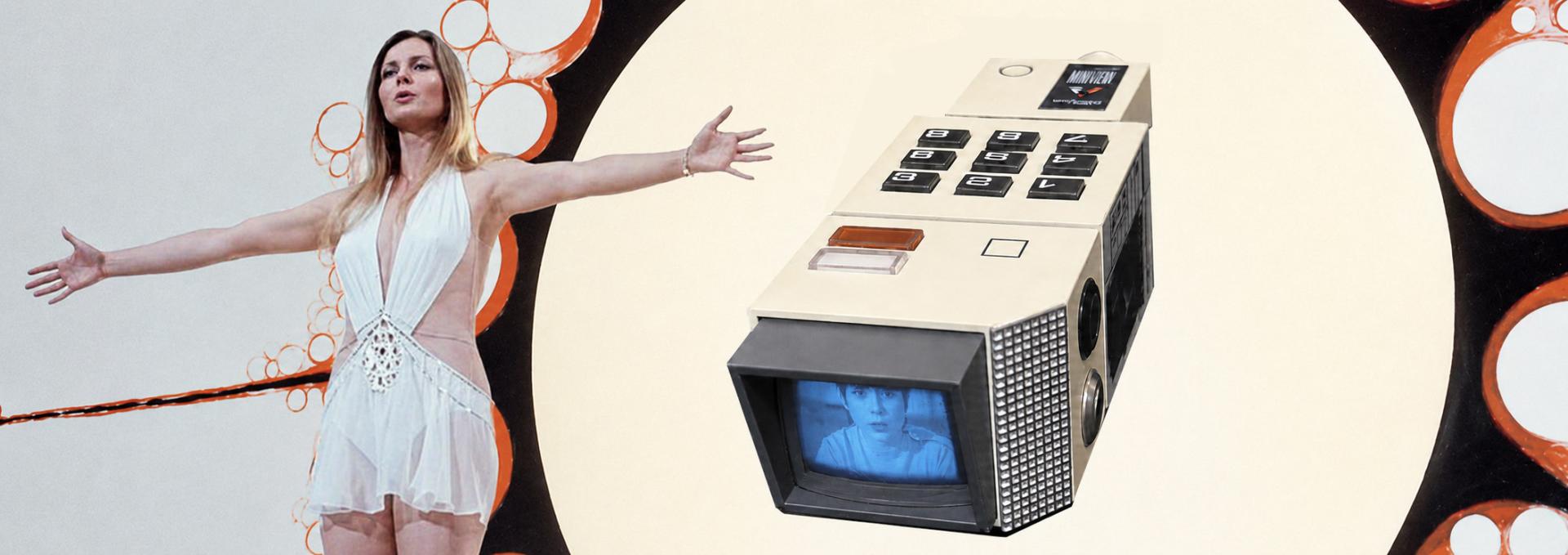
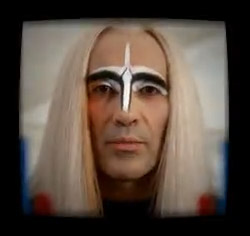
The series imagined the Commlock. Fifty years on, the Commlock imagines what comes next!
001 INTRODUCTION
COMMLOCK ALPHA
First broadcast in France on 13 December 1975, Space: 1999 hit head-on a television landscape still wary of science fiction. A few series such as The Outer Limits, The Sixth Sense, The Avengers or The Invaders had already been shown, of course, but none had made space and its dangers a central theme. Two further series would be scheduled shortly afterwards: Planet of the Apes and The Time Tunnel.
Carried by a symphonic score, the first season stands out as an atypical work in which narration outweighs action and technology flirts constantly with the transcendent. Its visual strength lies in the restraint of the sets, in the utilitarian look of the Eagles and the Commlocks, and in the layout of the base, inspired by NASA's own work. Nothing there looks superfluous: everything seems to have been designed by engineers to serve a function. That is what makes the existence of this base credible and tangible. Conversely, do not go looking for plausibility in the plots: they are there to make you dream, not to be airtight.
That, in fact, is the bargain the series strikes with us. Because we believe in the object, we accept the journey. A grey corridor and a spacecraft that looks like a tool are enough to buy the right to go anywhere. That is the miracle of Space: 1999: an improbable blend of hard science fiction and mystical fantasy, whose singularity and freshness are found nowhere else.
As for season 2, I will not dress it up: it is a waste of film stock and a total misreading of the universe built by season 1. To meet ITC's demands and win over American broadcasters, Fred Freiberger debased that universe to the point of the pathetic. The series had superb sets, an iconic score, a unique concept, an audience already won over and endearing actors. He systematically ruined every one of those assets. From the music to the sets, by way of the scripts and the camera work, everything is cut-price, garish and in poor taste.
This second season sacrificed the contemplation of space, the emotion of discovery and the dread of the unknown on the altar of papier-mâché monsters and far-fetched stories. Say what you like, Fred Freiberger thoroughly earned his nickname of « The Show Killer ».
002 HISTORY
THE COMMLOCK, A SMARTPHONE IMAGINED IN 1975
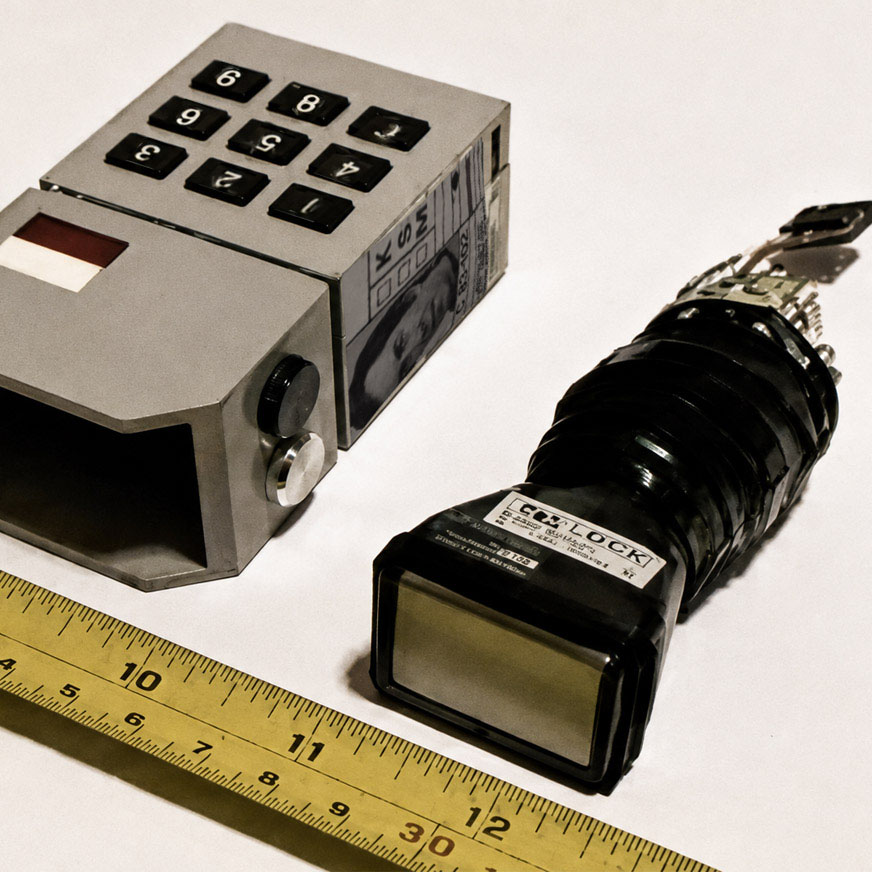
An emblematic element of the series, the Commlock was born of a bold vision. A portable television screen able to hold a video conversation with the other members of the base, to drive a computer or to act as a remote control. We are at the very edge of what was imaginable in 1975, when many households had only just bought their first television set.
It is remarkable that, instead of settling for a simple visual trick, the special effects team built a working prop around the smallest cathode ray tube available at the time, the one fitted to the 1971 Panasonic TR-001 micro-television. It is that kind of feat that helped make Space: 1999 a legendary series, giving it an aura of technical credibility.
In a nod to the date of the series, it was indeed in 1999 that the Kyocera VisualPhone VP-210 became the first mobile able to transmit live video, at the giddy rate of 2 frames per second. We would nonetheless have to wait until 2010 for the spread of 4G to make that feat commonplace.
Suffice to say that Space: 1999 was more than one step ahead.
03 THE PROJECT
COMMLOCK ALPHA: THE GENESIS
I was twelve when I discovered Space: 1999. I was already fascinated by electronics, astronomy and the little science fiction I had access to. Every episode unfolded before me magnetic transport tubes, nuclear plants, smartphones ahead of their time, and fantastic spacecraft. The computer spoke...
I was being pulled out of prehistory and thrown into the future. I waited for each episode with an impatience that is hard to imagine today. In that frame of mind, owning a Commlock was an unreachable dream: the dream of being a member of Moonbase Alpha and taking part in their incredible adventures.
How do you resist the urge to fulfil a childhood dream like that? By its very nature the Commlock is a fabulous challenge. Only, I did not want to settle for a simple video player or a re-cased walkie-talkie. The idea taking shape was to be able to talk to the heroes of my childhood, to take part in the life of the lunar base.
On the face of it, the idea is completely insane, but thanks to my recent work with AI, I glimpsed a world in which that dream was possible. A persistent world in which, why not, the characters could evolve in real time, work, sleep, play. A world in which scenarios generated on the spot would plunge me into adventures, into episodes that were never filmed.
That moment was a turning point, the moment when everything begins.
04 THE PROJECT
THE START OF AN OUTLANDISH PROJECT
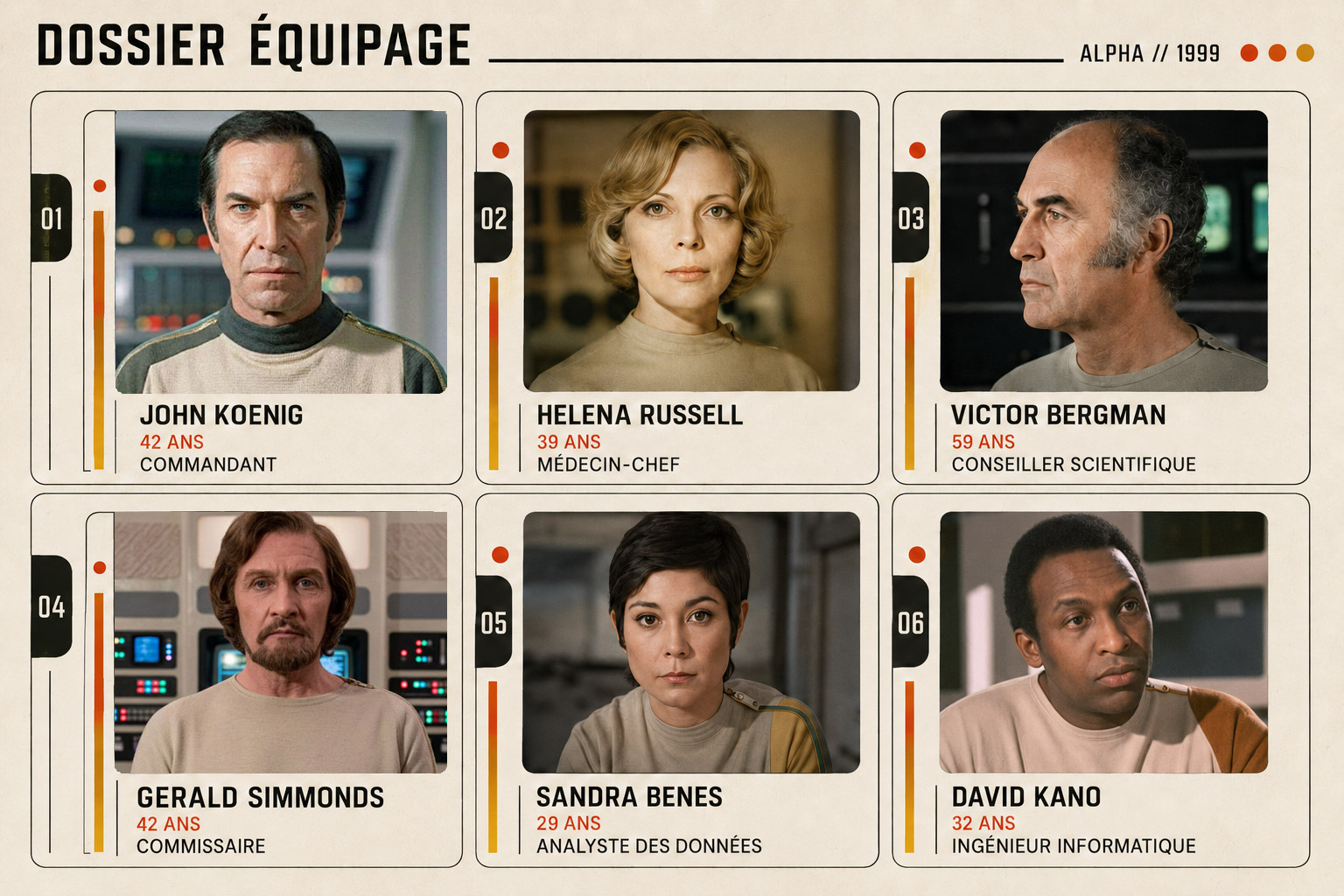
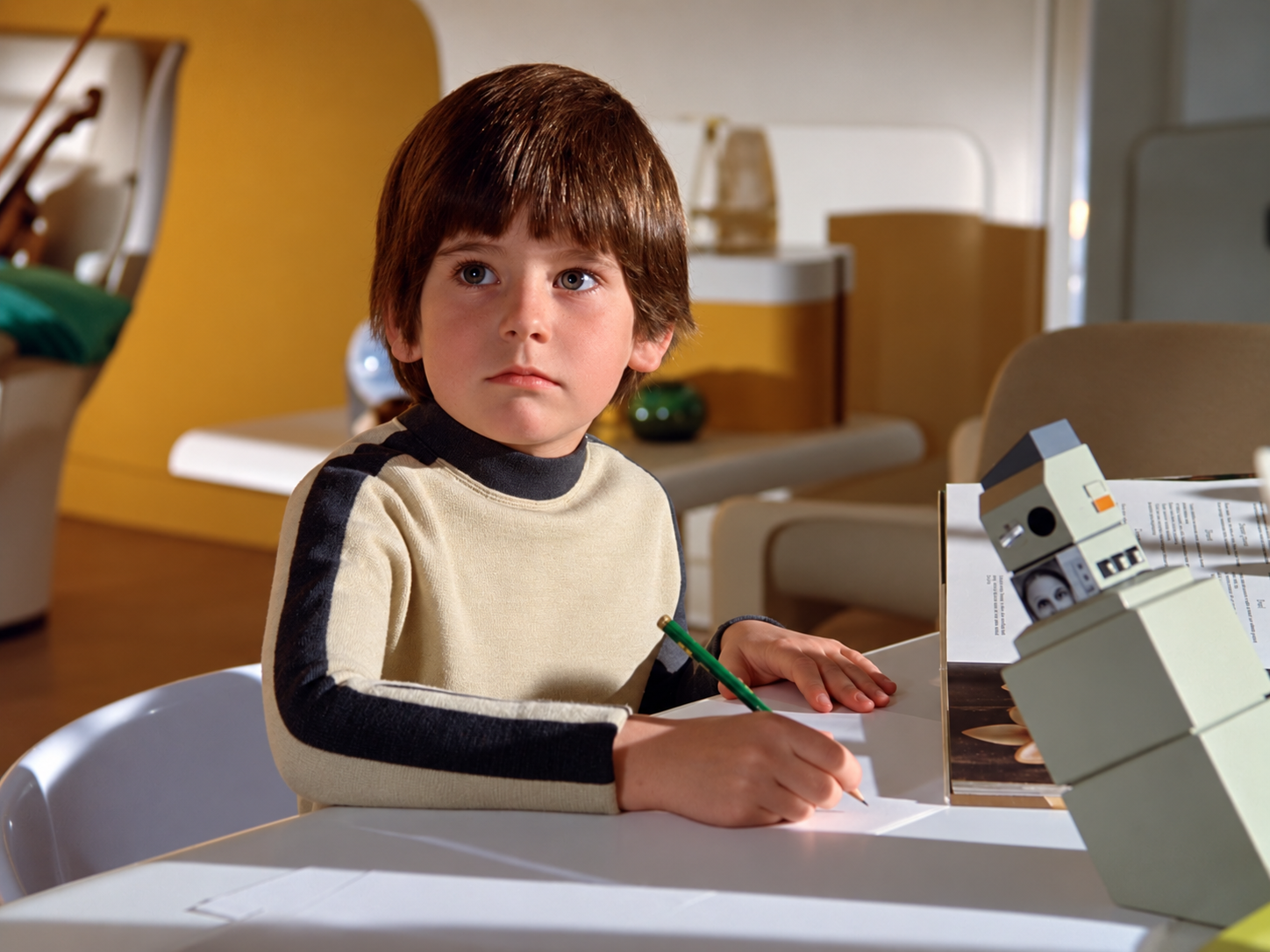
At the beginning the idea was simple: to have a device that would let me communicate with the other members of the base. I mean chatting out loud with John, Victor or Helena, launching episodes or iconic moments from the series.
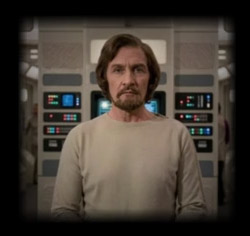
To do that, I had to build avatars of those actors — personas backed by a shared knowledge base and governed by a complete psychological profile. Given the conversational performance of the Gemini system, this promised fascinating discussions and twists. When I speak of the Gemini system, I mean Google's Gemini Native Audio, a high-performance AI model able to converse in natural language.
At this stage the steps seem clear. Find a housing for the Commlock. Choose a platform on which to develop the project. Select the technologies to use and gather the necessary graphic and sound assets.
Here is a summary of what the project was at this stage: a working replica of the Commlock from Space: 1999 — a self-contained unit with screen, microphone and speaker, putting its bearer in contact with Moonbase Alpha. You press a key, you speak, and an officer of the base answers — each with their own face, voice, character and field of expertise.
I thought I had set the bar very high. I was not ready for what came next.
05 STUDY
THE HOUSING
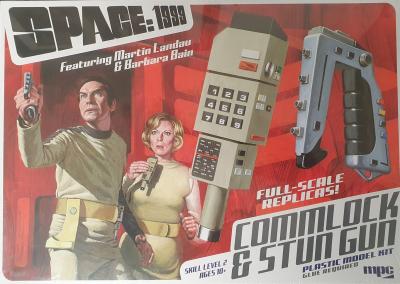
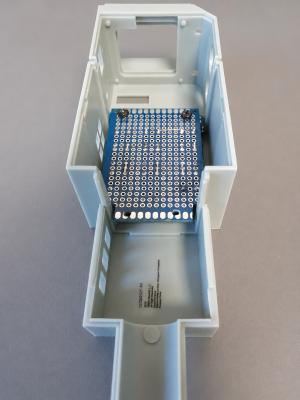
For the housing, I had the choice between building it by hand, 3D-printing it or using an existing model kit. I took the simplest route and got hold of the MPC kit, a widespread model massively adopted by modellers and makers. As it happens, it was out of stock worldwide. I eventually got one, but at a thoroughly indecent price.
I will pass over the strange emotion that came over me when I opened the box and held the parts of the kit in my hands. Like a window opening slightly onto a childhood long since gone.
I was pleasantly surprised by the space available inside the housing. The parts, however, would need many stages of preparation. The keys have to be cut out and filed, the plastic surfaces sanded and painted, and replacements found for certain elements such as the grille next to the screen, which is a simple piece of chromed plastic. The rest — lenses and buttons — would naturally be replaced by working components.
Let me come back for a moment to that grille problem. It sums up rather well the unexpected difficulties you face in this kind of build. At first sight there is no problem. You naively believe there will be no difficulty in finding a replacement grille. You start by looking at what is around you: a shaver grille, various filters, metal mesh, kitchen utensils. You go through every case and gadget in the house. But nothing matches. And yet it looks simple: some sheet of metal with rows of small aligned holes.
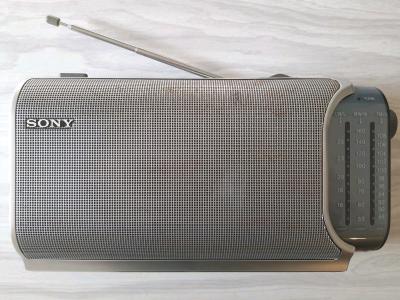
Then comes the revelation: how did they do it at the time? Logically, they must have used what they had to hand, so something common in the 1970s. And that is where, on a classified ads site, I spotted an old Sony radio whose speaker grille is very similar.
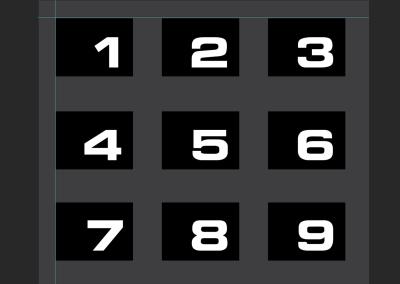
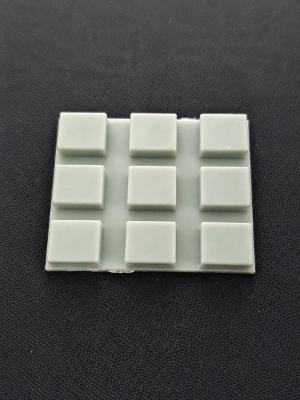
Every detail brings its own small challenge. Take the lettering on the keys of the numeric keypad. The kit comes with water-slide transfers. Not being a fan of the process, I decided to use Letraset-type transfers. The problem is the quality of the plastic the keys are made of. It turns out to be too soft for a clean transfer. So I used the decals supplied. At the time the result was satisfactory, but after a few days the letters began to break up despite the varnish applied.
In the end I decided to print the keys onto self-adhesive vinyl paper, which I then covered with a matt protective film. Since then the surface of the keys has not moved and I can change them at will. In truth, you lose a great deal of time on this sort of detail.
06 STUDY
HARDWARE_&_SOFTWARE
The choice of platform was very simple. In chess it would be called a forced move. There are in fact only three possibilities: the mini-PC, an Android platform or a Raspberry Pi board.
The mini-PC is ruled out immediately: expensive, too big, and with a power draw that would require an external battery. Android-based solutions are no more usable. Although they offer plenty of computing power and a useful amount of memory, they suffer from the same flaw as the mini-PC: prohibitive consumption and bulk.
That leaves only the Raspberry Pi family in the running. Given the size of the boards, the choice comes down to the Raspberry Pi Zero 2 W. Its main drawback is the ridiculous amount of onboard memory. I will have to live with it. For storage I chose a 64 GB SD card and, for power, a 4000 mAh LiPo battery. There are of course many other components I will not list here, such as flip-flops, amplifiers, a PowerBoost, a microphone, a speaker and all the associated wiring.
On the software side, the question of the programming language does not arise. When you talk about Raspberry Pi and artificial intelligence, Python imposes itself. With its many Pi-specific libraries, the language acts as an interface to powerful AI tools such as PyTorch, TensorFlow or OpenCV. On the PC side, I use it to write small utilities. As experience has taught me, writing a utility tailored to the task at hand often saves time compared with configuring some specialised behemoth.
07 STUDY
THE ASSETS
For images and sound, I drew heavily on the episodes of season 1 as well as a few fan-art sequences. I took music samples for atmosphere and isolated the computer sounds that accompany the Commlock's actions. For the avatars, I selected photographs of the characters, adjusted their gaze and their posture, corrected details and cleaned up the whole.
Thanks to AI, I turned those photographs into videos. One for a character appearing on screen, another for idle periods, and the last one where they speak and move their lips. That last one only plays while Gemini is speaking. The only problem with this technique is that the lip movement is not really synchronised with the sound. Ideally you would do proper lip-syncing. But the process is far too heavy in computing time. We are light-years away from what a Raspberry Pi — or even a powerful PC — can do. Given the very small size of a Commlock screen, the video does the trick. In the end it is no more distracting than watching a badly dubbed film. It is an acceptable compromise. I have since reduced the problem by adding a function that freezes the image whenever the voice pauses.
08 BUILD
PAINT & MEASUREMENTS
Time to get to work. I could have started with the electronics and the code, but I was far too impatient to see what this Commlock would look like. So I went straight to preparing the parts: sanding, applying primer and painting the main elements.
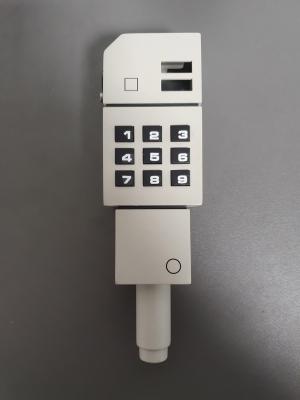
I found on the internet that the choice of colours fuelled a great many discussions. After analysing the shades of every Commlock visible in season 1, I settled on a satin RAL 7044 for the body of the unit and a matt RAL 7024 for the screen bezel. In the series the colours vary from one episode to the next; there is no absolute rule, these are film props and that leaves real freedom of interpretation.
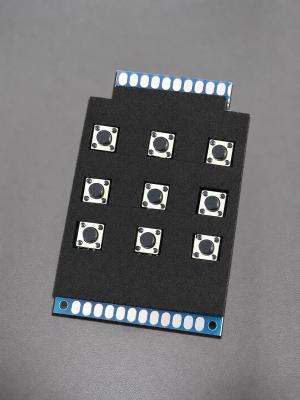
For the record, the paint (from BSP Peinture) and the varnishes were applied with a spray can, with the exception of the parting lines of the housing, done with a black Posca pen. I then measured the space available for the screen as well as the spacing of the keypad keys. No problem for the screen, which would be a 1.6-inch LCD. On the other hand, it turns out no off-the-shelf keypad can fit the dimensions of the housing: I would have to build it from scratch. Likewise, it proved impossible to find indicator lenses of the right size. So I used the ones supplied in the kit: after matting them down, I filled them with coloured UV resin to get the look I was after.
09 BUILD
PHOTOSHOP & TRIM
The Commlock has a certain number of purely decorative elements. It is the rectangular element at the bottom of the front face that raises questions. It is never used in the series and its purpose is anything but clear. Depending on the source it is described as a computer input/display screen, a magnetic computer ID panel, a power cell or even a radio. Period photographs are not clear. As a result, a great many different interpretations exist.
Let us examine the various hypotheses. First, the computer interface. To me it does not hold up. The Commlock already has a screen and a keypad; a second interface would be redundant.
The power cell hypothesis is far more logical. The circle to its right could be the eject button. Such a system would allow the battery to be swapped without going through a recharging phase. It is a neat idea, but as far as I know no source supports the theory.
That leaves the radio hypothesis. It has to be said that the original decoration is modelled on the station selectors of the radios of that period. Now, I find it hard to imagine there being several transmitting stations on the Moon. If there were an entertainment channel on the base (like the Alpha Channel on my Commlock), it would go through the usual communication circuit. In short, no hypothesis is truly satisfactory and, to my mind, it is simply trim that needs no explanation at all.
For my part, I chose to make an identification plate. It states that the device belongs to the I.S.C. (International Space Commission). Above the barcode I placed an Adobe Stock logo. It represents the letters AI (artificial intelligence) while also evoking the A of Moonbase Alpha. I should point out that this version of the barcode is not anachronistic: it existed in 1975.
Then there is the side plate, the one with the photograph. I printed it on a self-adhesive metallised sheet. I then covered it with an iPhone screen protector cut to size. That was the right idea. Once assembled, the plate has an industrial finish of the best kind. I really do find it magnificent, its metallic sheen shifting with the angle of the light.
10 BUILD
FIRST TESTS
At the outset the workbench is almost empty. There is only a Raspberry Pi, an SD card, a screen and a handful of wires and contacts. At the PC I prepare the basic functions that will let me test the hardware.
To start with, I play an MP4 video. This first test turns out to be an utter disaster. The frames follow one another on screen with exasperating slowness. I feel like I am watching an old slideshow. After investigation, it turns out that neither the hardware nor the code is to blame, but the screen's protocol, which does not benefit from the board's acceleration functions. Those functions, which I was counting on, are only available over HDMI — and my screen is SPI.
I admit I did not see that one coming. The situation is serious: it will not be enough to rewire or swap the screen, because there is no other one that will fit inside a Commlock housing.
But there is no question of stopping at the first setback. After some research, I find a workaround that consists of preparing the sequences so the Raspberry does not have to decode them. In that arrangement the soundtrack has to be handled separately. Once implemented and tested, the video finally becomes smooth. The operation does, however, take up a lot of memory, adds intermediate steps and makes the code more complex. Never mind: this is only the first of the surprises waiting for me.
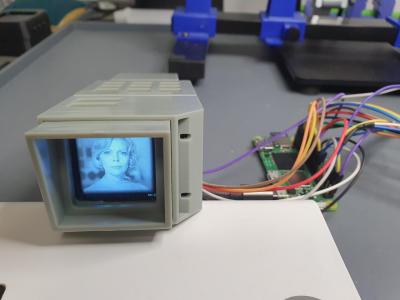
Then comes the moment I had been waiting for: deploying the Gemini APIs. After a few attempts, the emotion is there. Helena Russell's face appears on the screen in a bluish halo. It is a great satisfaction. From there I am able to add all the avatars I had prepared beforehand.
The next step is to speak to them. So it is time to connect everything to do with sound: microphone, amplifier and speaker. I also need to write them custom prompts. For now they do not know who they are, and have no context. Even their voices are still to be defined. They are not Alphans yet.
11 BUILD
THE KEYPAD
Now on to building the keypad, which sits at the bottom of the housing. Unfortunately the housing has no reinforcement to fix it to. So I thought of gluing in two strips of epoxy board to act as a support. The keypad rests on them and is held by four screws, so it can be removed. With this arrangement the plate ends up raised, which gives the keys room to travel.
For the keypad itself, a simple pre-drilled board will do. You just have to place the micro-switches in the right spots and wire them from the back. To hold the key caps, I slip strips of foam between the contacts and fill the void behind the keys with plastic.
I had been dreading this stage which, I must admit, proved far simpler than expected.
12 BUILD
THE SCREEN
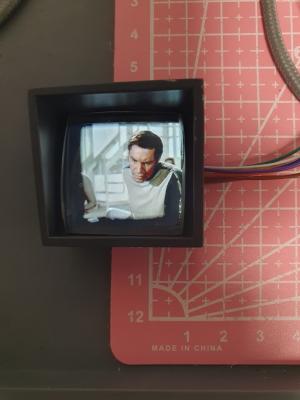
The screen was one of the great successes of this Commlock. I will skip the changes of screen size and the various tests I ran and go straight to the question of the look. I say more about it below, but there is the option of displaying in colour or in black and white, which gives completely different moods. Playing in black and white gives you the bluish cathode-ray look of the series. The image must not be perfect. That is why, even before going through the digital filters, the images and video sequences were encoded with distortion effects to simulate the display of a curved screen. I have to say I am very pleased with the result.
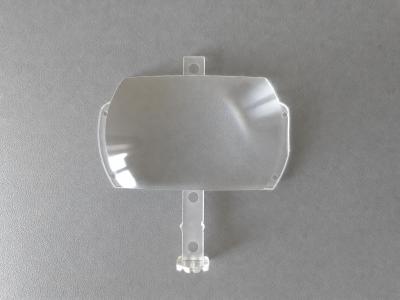
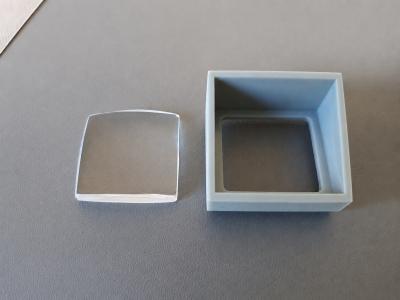
The eye, however, is not so easily fooled. You are displaying on a flat screen and inevitably it shows. I thought of using a Fresnel lens to get genuine optical distortion, but that solution proved disappointing.
While searching, I finally found the rare gem: the lens from an old magnifying eyepiece. Made of plastic, it has the advantage of being easy to re-cut.
After an hour spent with a Dremel and files, I set the optic above the screen. The result exceeded all my hopes: you really do feel you are looking at an old cathode-ray screen. I cannot wait to see the whole thing in action.
13 BUILD
A MATTER OF SECTORS, TUBES AND SECTIONS
The project is moving along. The prompts are in place, as are the main configuration files. The biggest job was Alpha's Lore*, containing the description of the base, the organisation of the sections, the episode summaries, and the psychology and identity of the characters. It also holds the descriptions of Alpha's tools, weapons and technical elements. In short, it is the Bible: the organisation of the world the personas live in.
To build that Lore, I needed to know the internal organisation of Moonbase Alpha. Unfortunately, that plan was never really established. Worse still, the landmarks and names used in season 2 muddied the waters.
To reconstruct the layout, I cross-referenced several sources: the sets and indications visible in the episodes (season 1 only), the dialogue mentioning particular sectors, and the plans published in the Moonbase Alpha Technical Notebook of 1977. The more recent manual published by Anderson Entertainment also served as a reference, with caution, since it brings together information from both seasons and adds elements intended to fill the gaps.
The historical documents show four main levels: G, H, I and J. Level G forms the upper habitable section, while level H rests directly on the lunar surface and houses, among other things, the main network of transport tubes. Levels I and J extend below the surface and gather the technical installations, the hangars and the most protected infrastructure. The central tower has its own vertical organisation and houses Main Mission, the true operational heart of Alpha. Starting from the general plan, the buildings were then grouped according to their dominant function: command, medical sector, scientific research, technical services, power and life support, living quarters, recreation and hydroponics, security and defence, pads and flight operations.
The final result is not a production plan recovered intact. It is a reasoned reconstruction: it respects as far as possible what appears in the first season, draws on the historical technical documents and implicitly flags the areas where interpretation was required. This organisation gives a simple and coherent representation of the original Moonbase Alpha. That preparatory work was indispensable. With this scheme, the characters' speech and the scenarios can rely on shared, credible locations. Likewise, the alert radar of the Commlock can indicate precisely which sector is affected by a problem.
* Lore refers to the whole body of stories, myths, traditions and background detail that make up a fictional universe
14 BUILD
THE MOMENT OF TRUTH
Were there any last-minute changes? Yes, both in hardware and in software. The Commlock's power circuit, for instance, was entirely redesigned. Likewise, to get closer to the way the device is used in the series, I replaced full duplex with a Push To Talk button. The result was striking. From the moment it was fitted, the dialogue gained in authenticity. It is an unexpected effect: the gesture reinforces the immersion, the interaction. I had feared a step backwards, but it is a real improvement. A nice touch: I added an auto-rotate function so the screen is always the right way up in use.
I also added background music. It accompanies the action and varies the mood. That is very useful now that it is possible to trigger a red alert or simulate incidents on the base. It is fascinating to see how seriously the Alphans take these events. They call out to each other and comment on them endlessly.
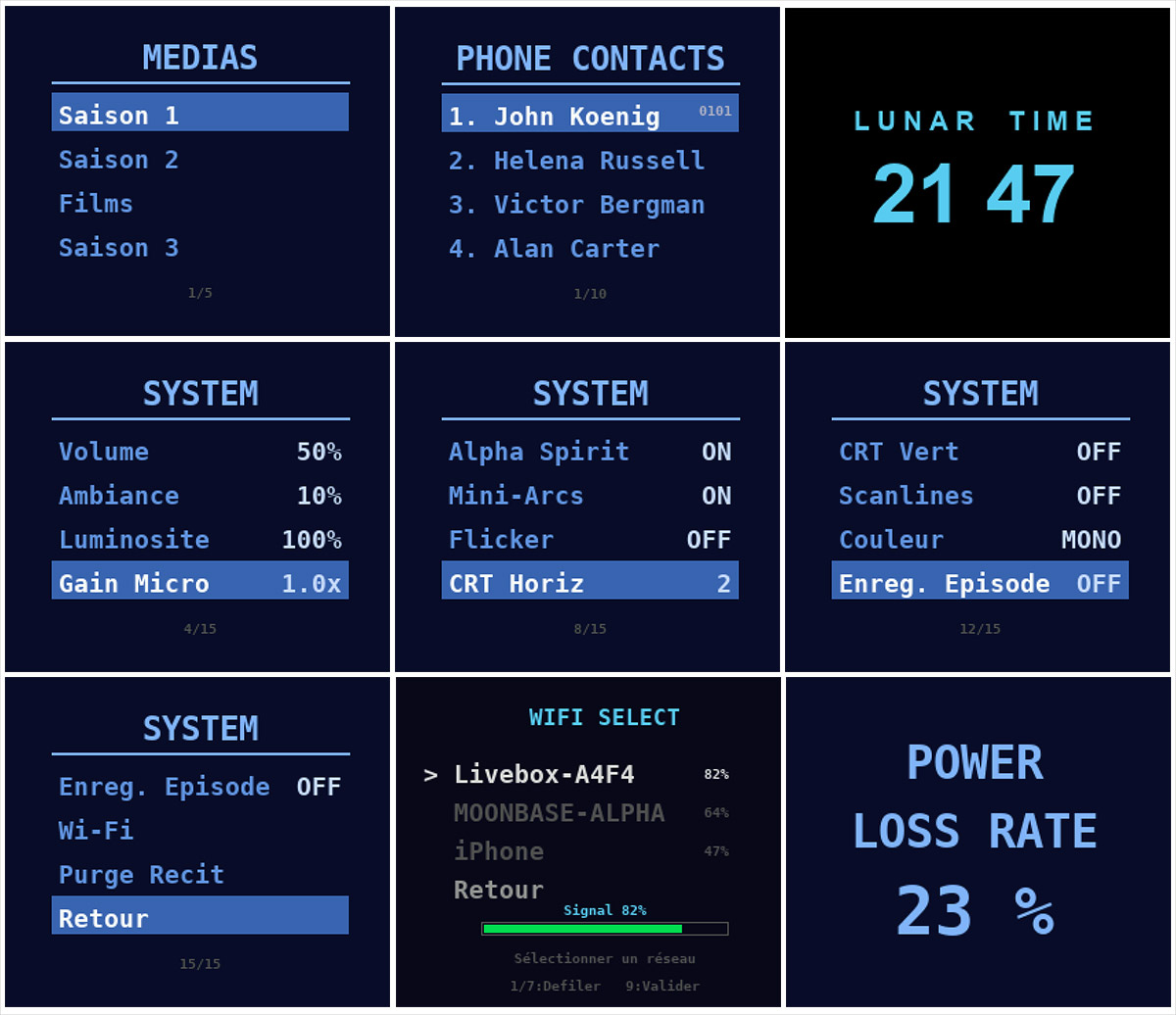
Other points have been greatly improved, such as command handling, which now works by mode. That is, the function of the keys changes according to use. You can be in normal mode, episode mode, mini-series mode or system mode. The Commlock is now managed in full through a range of configuration panels.
I gave every screen on the Commlock a text-mode display, the only kind used in the series, which fits the period. That is why, in the series, the set decorators introduced screens showing CRT effects, oscilloscopes and other pseudo-radars, in order to fill that graphic void.
For the record, the first commercially sold computer with native graphics functions was the Apple II, released in 1977. Its HI-RES mode offered 280x160 pixels in 4 colours (black, white, green, violet).
I also gave the characters the ability to display the time, to forecast the lunar cycles, the local weather and the tide times, or to tell me the output of my solar panels. The presence of these tools may be surprising, yet it is not merely gratuitous. The local weather, for example, influences the events taking place on Moonbase Alpha. A thunderstorm becomes a magnetic storm, heavy rain can cause a fluid leak or a flood. A strong wind can become a solar wind; a hard frost, a cryogenic leak. A poor yield from the solar cells translates into an unexplained loss of power on the base. All of it reinforces the immersion.
One last point. In the screenshots you can see the image of the "Phone contact" module. As the name suggests, it lets you reach a landline or a mobile anywhere on Earth through VOIP. To use this function the Commlock obviously has to be within reach of Wi-Fi in order to have internet access.
Having reached the results I wanted, the time had come to assemble the Commlock physically. First, fit the slide switch of the power button. Hard-wire the various circuits for permanent integration. Replace the test buttons with backlit metal models and screw the keypad into place. The LED strip is fixed behind the orange side indicator and the screen is carefully positioned. Little by little, every element finds its place. At this stage you have to be extremely meticulous. There is a great deal of handling and the slightest slip could tear off a wire or damage a part. The density of the circuits in such a confined space would make any repair very difficult.
Then comes the final gesture: clipping the battery onto the Power Boost. From that moment the circuits are live. I will not pretend there is not a slight anxiety in powering the device up for the first time. In electronics, that moment is called the "smoke test".
A small flick of the switch. And after a minute, the screen lights up with its characteristic beep. Weeks of effort have just found their reward.
15 EPILOGUE
THE COSMIC ARK
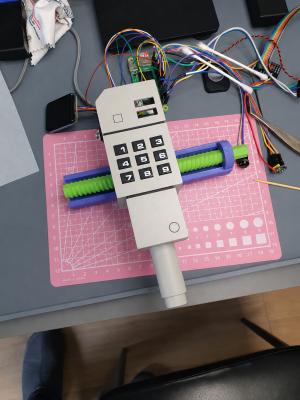
Building the Commlock ended in success. At last I hold in my hands this iconic device that made me dream so much. From then on I spend hours talking to the personas, testing their answers, simulating situations or watching episodes on the little screen. I am on Alpha.
Everything works perfectly, but as time passes I feel a vague frustration rising, a sense of incompleteness. At every connection the characters rediscover me and forget the previous conversations. Apart from the events I trigger artificially, nothing happens. Alpha is empty of the human interactions of a crew of more than 300 people. Where are the sorrows, the joys and the fears of this community? Who does what, and when? Does nobody ever sleep? Does time not exist?
That realisation would set off a series of changes that took me a very long way. I am not going to give the full history of those developments. It would take too long and I doubt anyone wants such a river of prose. So I will simply describe the improvements that were introduced, trying to keep to chronological order.
I added four important software building blocks. Four fundamental changes, each of which would on its own deserve to increment the system's version number.
First, the concept of a persistent world. The idea is to maintain a « world state »: the danger level and the status of the various activities of the base — for example « an Eagle is in flight, piloted by Carter ». That information operates at every level: you cannot send into orbit an Eagle that is already in flight, and a character cannot be unaware of a situation another has just created. This state persists when the Commlock is restarted. Thanks to it, all the characters share the same reality.
Second, a scheduler. It is the master of the clocks, the conductor of time passing on Alpha: it holds the loop that paces the events of the base's life, service traffic, the progression of arc phases and the deadlines of the story arcs. It can also make random events surface — events in keeping with the series and with the characters. These two processes work in synergy.
Then the scriptwriter enters the stage. The base is alive, but it lives at random: events follow one another without any of them setting up the next. So I added a supervisor — a second AI, which has no voice and never shows itself.
It first needed a memory. I set up a logbook in which each day's incidents, alerts, decisions taken and their consequences are recorded. Then comes the plan. When the Commlock starts up, the scriptwriter rereads the last seven days of the log, the project bible and the world state, then writes the day ahead: a through-line, two or three events with their time slots, and one secret per character. The scheduler plays that plan in priority over its random draw, and each secret is slipped into the prompt of the officer concerned — never said spontaneously, only as subtext.
That is what changes everything: everyone knows something the others do not, and a day on Alpha stops being a succession of incidents and becomes a story that moves forward.
The last addition, too, marks a new version of the system. Namely: the story arcs. The persistent world gave continuity, the scheduler gave rhythm, the scriptwriter gave direction — what was missing was a climax. I introduced arcs: genuine mini-episodes that develop with rising tension, a dilemma and a conclusion with multiple endings.
The principle is simple. An event out of the ordinary occurs and the relevant officer takes charge of it. The situation worsens, the crew debates, and then comes the moment when nobody can decide in my place any longer. Options are put forward, with a countdown. If I do not answer, the crew decides for me. That is deliberate: the Commlock is not a game waiting for its player, it is a base that lives. An episode is watched as much as it is played. Episodes can be streamed, which avoids filming the screen. I will put a few examples on this page.
The concept is worthy of an episode of Black Mirror: "A film prop becomes the scriptwriter of the series that gave birth to it".
The Commlock has become a digital ark, a sanctuary in which the last survivors of Moonbase Alpha have taken refuge. A project that fully deserved to open the first page of this site. 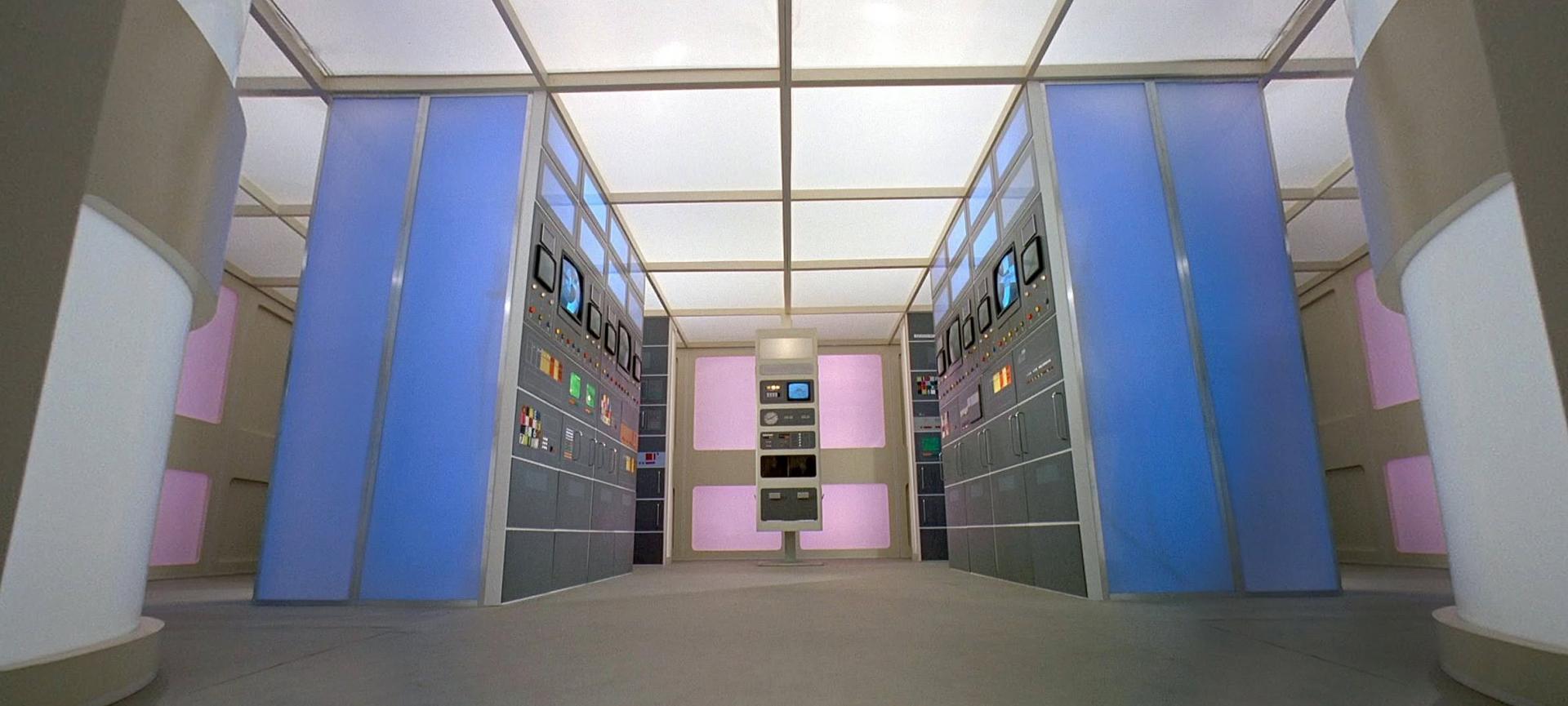
COMPLETE OR NOT ?
The Commlock's data sheet reads complete. The project was seen through and the device behaves wonderfully given the hardware limitations. I did, however, have to accept many sacrifices in functionality and to scale back the scriptwriter's capabilities.
With more powerful hardware, overall smoothness and episode generation could be improved beyond measure.
Let us say that this Commlock is a prototype. I know myself, and I already know I will revisit the project. Within a few months the Audio Native models will probably have moved on and I am already thinking of using a Radxa Zero 3W or an Orange Pi Zero 2W, which would give me the comfort and the power I lacked. Unless I go through another system that would let me use the actors' real voices live, which raises no legal problem at all for private use.
Before that, I have a new project close to my heart to bring to life. I am keeping it secret for now, but here is a sizeable clue: the Commlock is 19 cm long; what I am preparing is 1.70 m tall. Second clue: it turns without turning. Third clue: it appears at least once in most of the science fiction series of the 1970s.